
What Is PMI, and How Do You Get Rid of It?
November 10, 2026
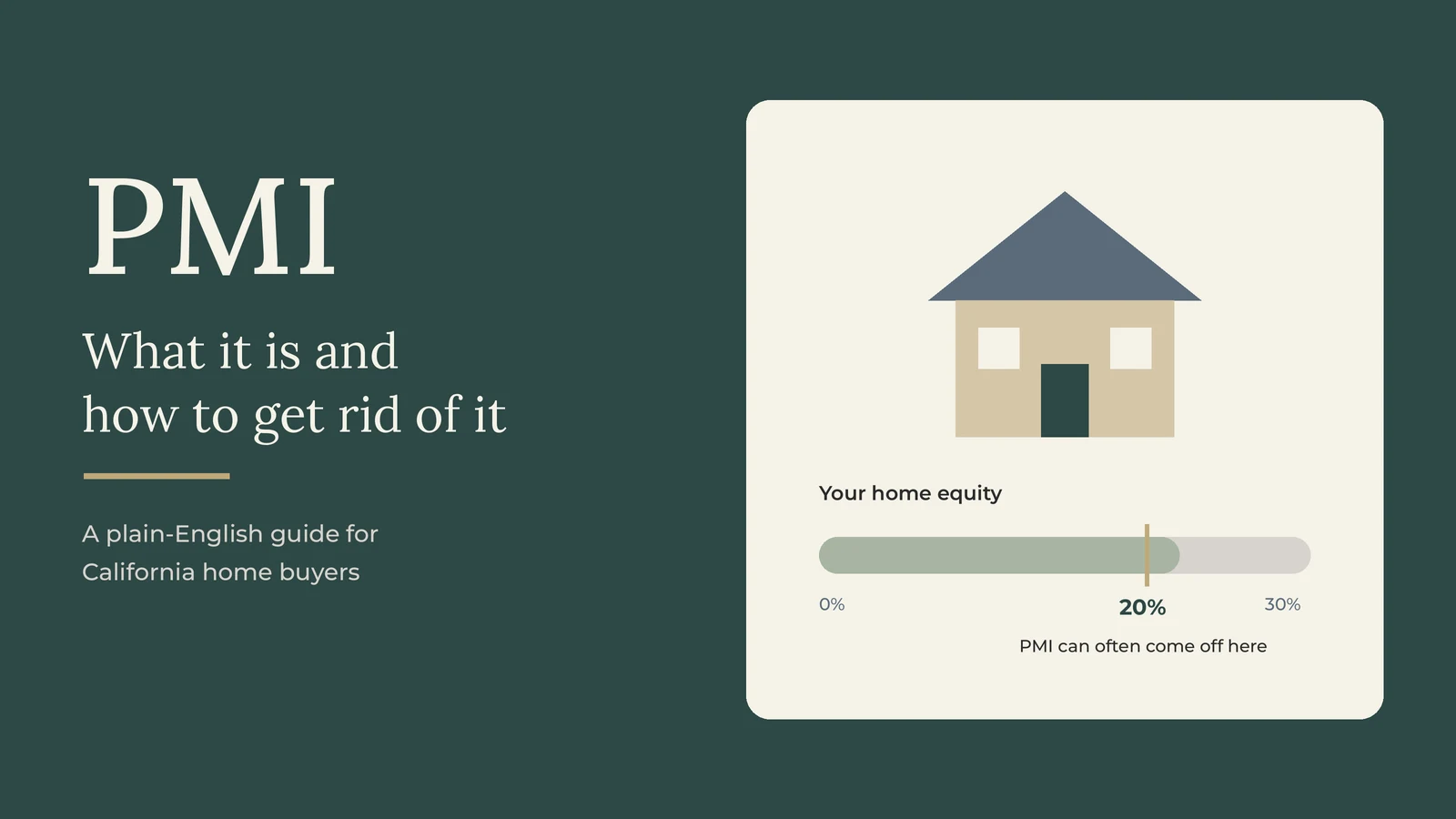
If you're getting ready to buy and you don't have 20% to put down, you've probably heard the letters PMI. A lot of buyers see it on a loan estimate and think it means they did something wrong. You didn't. PMI is really common, and for many people it's the thing that lets them buy sooner. Let's walk through what it is and how you may be able to get rid of it down the road.
What is PMI?
PMI stands for private mortgage insurance. It shows up on a conventional loan when your down payment is less than 20% of the price. It protects the lender, not you, if a loan stops getting paid. In return, lenders are willing to make loans with smaller down payments.
Most of the time PMI is a monthly charge that's added to your mortgage payment. What it costs depends on things like your credit score, your down payment and the size of your loan, so two buyers can see pretty different numbers. We'll show you yours on your estimate so there are no surprises.
Is PMI a bad thing?
Not really. Saving up 20% can take years, especially in California. PMI may let you buy now and start building equity instead of waiting. Think of it as a tool. The goal is to know what it costs and have a plan to drop it later.
How is FHA mortgage insurance different?
An FHA loan has its own version, called MIP, or mortgage insurance premium. FHA loans have an upfront premium that's usually rolled into the loan, plus a yearly premium that's split into your monthly payment.
The big difference is how long it lasts. With FHA, if you put less than 10% down, the monthly MIP generally stays for the life of the loan. If you put 10% or more down, it generally lasts about 11 years. For a lot of FHA borrowers, the way to drop it later is to refinance into a conventional loan once they have enough equity.
How do you get rid of PMI on a conventional loan?
Here's the good news. Conventional PMI isn't forever. Under a federal law called the Homeowners Protection Act, there are a few ways it can come off.
- Ask for it at 80%. Once your loan balance is scheduled to reach 80% of your home's original value, you can usually ask your loan servicer in writing to cancel PMI. You'll generally need a good payment history, and the servicer may ask for proof that your home's value hasn't dropped.
- It ends on its own at 78%. If you're current on your payments, PMI should automatically end when your balance is scheduled to reach 78% of the original value.
- Pay down your loan faster. Extra payments toward principal can help you reach that 80% mark sooner. It's smart to check with your servicer first so the extra money goes where you want it.
- Your home's value goes up. Some servicers may let you use a new appraisal to show you have more equity because your home is worth more now. Rules vary, and there's often a waiting period, so call your servicer and ask what they need.
- Refinance. If you've built enough equity, a refinance may let you drop mortgage insurance. It only makes sense if the numbers work for you, so we'd look at the full picture with you first.
"Original value" usually means the lower of the price you paid or the appraised value when you bought. Your servicer can tell you the date you're expected to hit 80%, and it's worth writing that down.
A few things to know before you buy
- Ask about mortgage insurance up front. When you compare loan options, look at the payment with mortgage insurance included, not just the loan amount.
- Compare conventional and FHA side by side. One may work better for your credit, down payment and plans. We can lay them out next to each other.
- Don't drain your savings just to skip PMI. Keeping some cash for repairs and emergencies matters too. My post on what to save for when buying a home is a good next read.
Have questions about mortgage insurance or want to see what your payment could look like? Reach out to our team or connect with me directly. We're happy to walk through your options with you, and we help buyers all across California.
 Ready to Move Forward?
Choose Your Loan Officer →


